

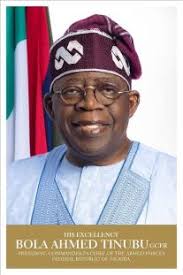
Bola Ahmed Tinubu, born on March 29, 1952, in Lagos, Nigeria, is a seasoned politician and the current President of Nigeria. His political journey spans decades, marked by significant contributions to Nigeria’s democratic evolution and economic reforms.(BioLegacy Foundation)
Early Life and Education
Tinubu pursued his higher education in the United States, earning a Bachelor of Science degree in Accounting from Chicago State University. His academic background laid the foundation for his subsequent career in both the private and public sectors. Bola Ahmed Tinubu: Nigeria’s 16th President
Political Ascendancy
In 1992, Tinubu was elected to the Lagos West Senate seat under the Social Democratic Party (SDP). Following the annulment of the 1993 presidential election and the subsequent military regime, he became an active member of the pro-democracy group, the National Democratic Coalition (NADECO). After spending time in exile, he returned to Nigeria in 1998.(Encyclopedia Britannica)
In 1999, Tinubu was elected as the Governor of Lagos State under the Alliance for Democracy (AD) party. He was re-elected in 2003, serving two terms until 2007. During his tenure, he implemented policies that improved the state’s infrastructure, education, and healthcare systems .(Encyclopedia Britannica)
National Influence and the Formation of APC
After his gubernatorial tenure, Tinubu continued to exert significant influence in Nigerian politics. In 2013, he played a pivotal role in the formation of the All Progressives Congress (APC), a merger of four opposition parties aimed at challenging the dominance of the People’s Democratic Party (PDP). His support was instrumental in the election of Muhammadu Buhari as President in 2015 and 2019 .(Encyclopedia Britannica)
Presidency and Economic Reforms
In 2023, Tinubu was elected as Nigeria’s 16th President. His administration has focused on implementing economic reforms to stabilize the nation’s economy. Notable measures include the removal of fuel subsidies, which had been a significant fiscal burden, and the unification of the naira exchange rate to promote transparency and attract investment .(Financial Times, Read Naija)
Additionally, President Tinubu has introduced initiatives aimed at improving infrastructure, such as the completion of over 5,000 kilometers of major highways, and reforms in the energy sector, leading to an increase in electricity generation .(afromusicplus.com)
Social Programs and Youth Engagement
Recognizing the importance of youth in national development, President Tinubu has launched several programs targeting the younger population. The 3 Million Technical Talents Programme (3MTT) aims to build Nigeria’s technical workforce, while the Nigerian Education Loan Fund (NELFUND) provides affordable loans for tertiary education .(tinubustraight.com) Bola Ahmed Tinubu: Nigeria’s 16th President
Furthermore, the Renewed Hope Labour Employment and Empowerment Programme (LEEP) seeks to create 2.5 million jobs annually, addressing unemployment and fostering economic growth .(tinubustraight.com)
Challenges and Future Outlook
Despite these initiatives, President Tinubu’s administration faces challenges, including high inflation rates and security concerns. Inflation remains a significant issue, partly due to the removal of subsidies and other economic reforms .
As Nigeria approaches the 2027 elections, President Tinubu’s ability to address these challenges and deliver on his promises will be crucial in shaping the nation’s future trajectory.(Financial Times)
For more detailed information on President Bola Ahmed Tinubu’s policies and initiatives, visit the official Nigerian government website: https://www.nigeria.gov.ng.
Giftalhubtech
Giftalhubtech Innovative