

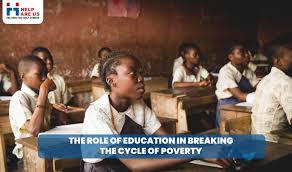
The Role of Education in Breaking the Cycle of Poverty is one of the most pressing global challenges, with far-reaching consequences across many areas of life. Among its most significant impacts is its effect on education. Children from low-income families often face numerous barriers that hinder their academic success and long-term prospects. Understanding these challenges and the ways poverty intersects with education is crucial for creating effective solutions.

1. Limited Access to Educational Resources
One of the primary ways poverty affects education is through limited access to essential resources. Families living in poverty often struggle to afford basic school supplies such as textbooks, uniforms, and computers. This lack of resources can significantly hinder a student’s ability to keep up with their peers.
2. Poor Health and Malnutrition
The connection between poverty and health is undeniable. Children in poverty-stricken households are more likely to experience health issues such as malnutrition, poor sanitation, and inadequate healthcare. Malnutrition, in particular, can affect cognitive development, making it harder for students to concentrate, learn, and retain information.
3. Psychosocial Stress and Mental Health Struggle
Children from low-income families often experience higher levels of stress due to unstable home environments, parental unemployment, or the constant pressure to meet basic needs. This chronic stress can lead to mental health challenges, including anxiety and depression, which in turn affect a child’s ability to learn. The emotional burden can make it difficult for children to focus on their studies, complete assignments, and participate in class activities, further exacerbating the academic gap.
4. Higher Dropout Rates
As students from low-income backgrounds face significant academic and personal challenges, they are more likely to drop out of school before completing their education. The lack of financial stability at home often means that older children must leave school to contribute to the family income.
5. Educational Inequality and the Achievement Gap
Poverty perpetuates educational inequality, creating an achievement gap between students from wealthier families and those from low-income backgrounds. Studies show that students from affluent families have greater access to high-quality education, extracurricular activities, and tutoring, giving them a significant advantage.
6. The Role of Teachers and Schools in Addressing Poverty’s Impact
While poverty presents numerous obstacles to educational success, schools and educators play a vital role in supporting disadvantaged students. By providing targeted interventions, extra tutoring, emotional support, and a safe learning environment, teachers can help mitigate some of the challenges that come with poverty.
Conclusion
Poverty is a powerful force that shapes the educational experience of millions of children worldwide. Its impact is felt in many ways—from limited access to resources and poor health to emotional stress and higher dropout rates. Addressing these challenges requires concerted efforts from governments, schools, and communities to provide equitable access to education, support at-risk students, and create opportunities for all children to succeed. By breaking down the barriers posed by poverty, we can ensure that every child has the chance to reach their full potential and contribute to a brighter future for all.
Let ’em Roll is an album by American organist Big John Patton recorded in 1965 and released on the Blue Note label.
Let
‘EM
Roll
Big
John
Patton